How to Actually Use Your Whoop or Oura Data
Millions own a wearable and don't know what the recovery score means. Here's how to read HRV, sleep, and readiness data and actually train around it.
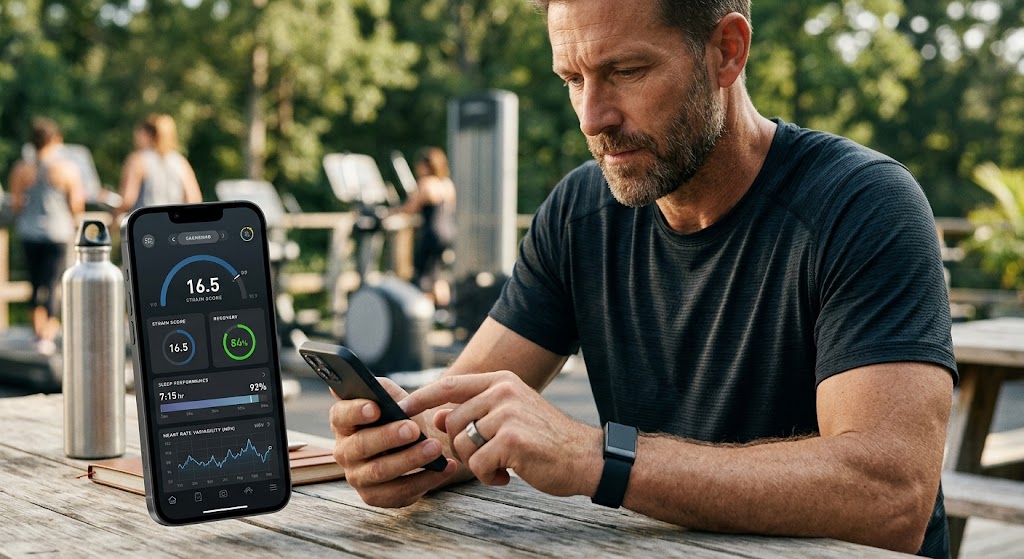
Wearables are everywhere now — Whoop, Oura, Garmin, Apple Watch, dozens of Indian brands doing sleep and HRV tracking on a budget. Millions of people wake up to a Recovery score or a Readiness number every single morning. Almost none of them know what to actually do with it. If your first move on seeing a low score is to feel bad about it and go train hard anyway, you own the hardware but you're not using the data.
Why owning the device isn't the same as using it
Most wearables give you three or four numbers that matter: a sleep score, an HRV (heart rate variability) trend, a readiness or recovery score, and resting heart rate. Each one is trying to tell you something specific about how much stress your body absorbed and how ready it is for more.
The single biggest mistake wearable owners make is treating the daily score as a grade on their willpower instead of information to act on. A low readiness score isn't a verdict that you failed at recovery — it's a signal to adjust today's plan. Most people read it, feel a flash of guilt or anxiety, and then train exactly the same way they would have anyway. That's the gap between owning data and using it.
The 4 numbers that actually matter
- HRV trend (not the daily number). A single day's HRV bounces around for dozens of reasons — alcohol, a stressful call, a cold, even how well the sensor sat overnight. What matters is your 7-day trend against your personal baseline, not today's raw figure against some app-wide "good" range.
- Resting heart rate drift. A resting heart rate that's crept up 5-8 bpm above your normal baseline over a few days is one of the more reliable early signs of accumulated fatigue, illness, or under-recovery — more reliable than how you subjectively "feel."
- Sleep consistency, not just sleep score. Going to bed and waking up within the same 30-60 minute window most nights matters more for recovery than chasing a perfect single-night score once a week.
- Readiness/recovery score as a training-day modifier, not a pass/fail. It's meant to tell you whether today is a push day or an easy day — not whether you're allowed to train at all.
The reason most people never get past the daily number is that the apps present it like a headline, and headlines get reacted to, not analysed. Look at the trend line over your device's app, not the single score on the home screen, and the data starts meaning something.
A real example
Meera, 36, Delhi, bought an Oura ring specifically because she felt constantly tired but couldn't tell if it was training, work stress, or bad sleep. For the first two months she checked her readiness score every morning, felt anxious on the low days, and trained hard regardless because "skipping felt like giving up." Once she started actually looking at her 7-day HRV trend and her sleep consistency instead of the daily number, she noticed her low-readiness days clustered almost entirely around nights she'd gone to bed after 1am for a late call — not around her training itself. She shifted those specific nights, kept training exactly the same, and her baseline HRV climbed over six weeks. The ring didn't change anything on its own; reading it correctly did.
A wearable that only makes you feel guilty in the morning isn't giving you data — it's giving you a mood.
How to actually use wearable data week to week
- Check your trend, not your daily score — most apps have a 7 or 14-day view; use it as your primary reference.
- On a genuinely low-readiness day (well below your personal baseline, not just "not perfect"), swap a heavy strength session for a lighter one or active recovery — don't cancel training outright unless the drop is severe or you feel unwell.
- On a high-readiness day, that's your cue to push a personal best or add volume — most people never use the good days deliberately, only react to the bad ones.
- Set a personal baseline in your first two weeks by just wearing the device and not changing anything — you need to know your normal before "low" means anything.
- Cross-reference resting heart rate drift with training load — a spike after a hard training block is expected; a spike with no training change is worth paying attention to.
- Don't let the device make training decisions for a coach or doctor to make — a genuinely concerning pattern (persistent elevated resting heart rate, poor sleep for a week-plus) is worth a real conversation with a professional, not just an app adjustment.
Different data matters for different training goals
Not every reading deserves the same weight, and it depends on what you're actually training for.
- Strength trainees should weight resting heart rate drift and sleep consistency most heavily — heavy lifting fatigue tends to show up there before it shows up in HRV, and a spike in resting heart rate the morning after a heavy leg day is expected, not alarming, as long as it settles within a day or two.
- Endurance and running-focused users get the most value from HRV trend and training load balance features most platforms now include — the risk of overtraining accumulates more silently in high-volume cardio than in strength work, where soreness usually gives you an earlier warning.
- Anyone using a program mixing both should watch the weekly trend across all three — HRV, resting heart rate, sleep consistency — rather than picking one metric, since a strength week and a cardio week can move each number differently for entirely normal reasons.
- Weekly periodization — deliberately planning a lighter week every 4-6 weeks — pairs naturally with wearable data. If your trend has been drifting down for two-plus weeks despite normal training, that's a stronger signal to take the planned light week seriously than to skip it because you "feel fine."
Common mistakes wearable owners make
- Reacting to a single bad night instead of the weekly trend. Fix: give any one-off reading 48-72 hours before treating it as meaningful.
- Ignoring the good days. Fix: use high-readiness mornings deliberately for your hardest sessions of the week.
- Comparing your score to a friend's or an app-wide average. Fix: your baseline is personal — a "70" that's low for you might be perfectly normal for someone else.
- Wearing it inconsistently, then wondering why the trend line looks noisy. Fix: consistent nightly wear for at least the first month is what makes the baseline reliable in the first place.
- Letting a low score become an excuse to skip everything, including light movement. Fix: low readiness usually calls for adjusted intensity, not zero activity — a walk or mobility session still counts as recovery-friendly.
- Never looking past the home screen. Fix: spend five minutes once a week actually opening the trends tab — that's where the useful information lives, not the daily notification.
How to know it's working
- You can predict your low-readiness days before the app tells you, because you've learned your own patterns.
- Training decisions on bad-sleep days feel intentional (lighter session, not skipped) rather than reactive.
- Your baseline HRV is trending flat-to-up over months, not steadily declining.
- You're using good-readiness days for harder sessions instead of training the same intensity every day regardless of the score.
- The morning score affects your day plan, not your mood.
FAQ
Is a cheaper wearable (₹3,000-6,000 Indian brands) accurate enough to bother with this? For trend-watching — is my HRV/sleep consistency improving or declining over weeks — most reasonably reviewed budget wearables are good enough. For exact clinical-grade numbers, no consumer wearable, expensive or cheap, should be treated as medical-grade.
Should I train on a low-readiness day at all? Usually yes, just adjusted — lighter weight, fewer sets, or a skill/mobility session instead of a max-effort day. Full rest is generally reserved for genuinely poor scores combined with how you actually feel, not a score alone.
How long before the data actually means something? Give it at least 2-3 weeks of consistent wear before drawing conclusions — that's roughly how long it takes to establish a personal baseline the daily numbers can be meaningfully compared against.
Putting it together
- Wear your device every night for the next two weeks without reacting to any single score — you're just building a baseline.
- After two weeks, note your personal normal range for HRV and resting heart rate.
- Start adjusting training intensity (not skipping) on days that fall meaningfully below that baseline.
- Deliberately use one high-readiness day a week for your hardest session.
- Check your trend view, not your home screen, once a week.
A wearable is only as useful as the decisions it changes. If you want that data actually built into your training plan instead of sitting in an app nobody reads properly, our 12-week program pairs your training with a coach on WhatsApp who can help you interpret exactly this kind of data against your real goals.